What Is Dental and Vision Coverage in Health Insurance?
Health insurance may also include dental and vision care benefits for routine dental care, eye exams, prescription glasses, and certain treatments. Knowing the covered and uncovered services can help you choose a health insurance policy that best meets your healthcare coverage needs.
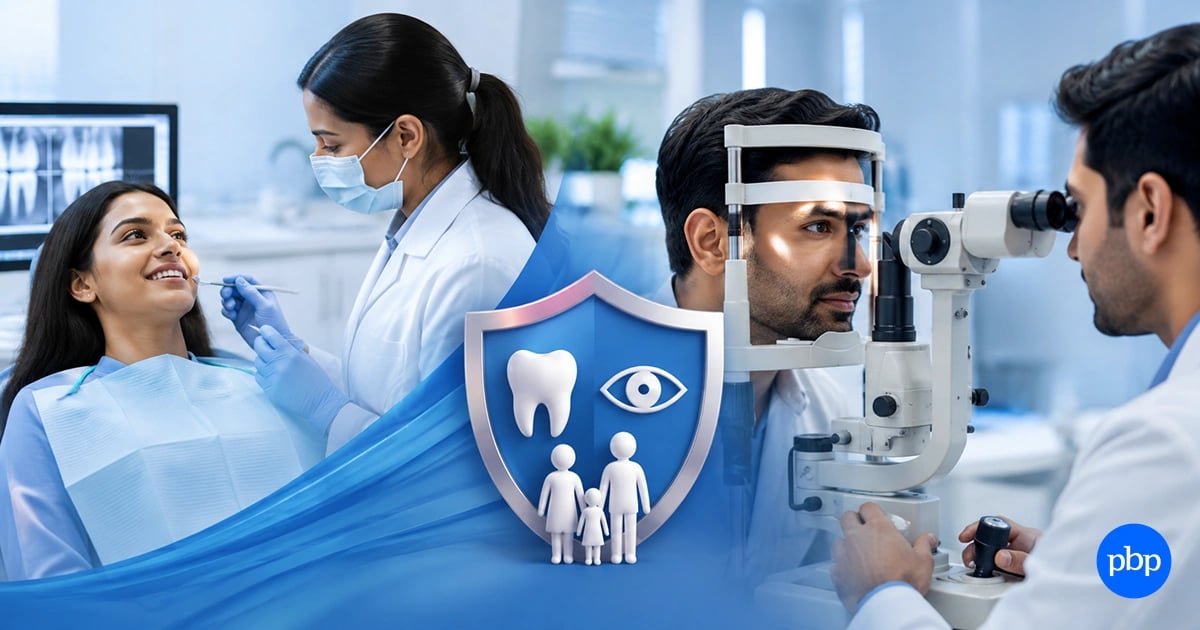
Health insurance is primarily concerned with the expenses of medical conditions, accidents, surgery, and hospitalisation. In contrast, there are many people who have ongoing expenses for eye care and dental exams. That’s where dental and vision coverage insurance comes in.
Dental and vision benefits generally come as optional add-ons or as part of certain comprehensive health insurance plans. These benefits may be available under both individual and family health insurance plans, depending on the insurer and the policy selected. These benefits help to lower out-of-pocket costs for preventive care, routine check-ups, and some treatments. This helps you understand coverage and whether these benefits work for your health insurance plan.
Understanding Dental and Vision Coverage
Dental or vision coverage is an insurance benefit that helps with some dental care and medical care for eyesight. These extras are for preventive or routine care that is often needed over the course of one's life and usually forms the lion's share of the health insurance bill, apart from what is required for hospital care.
Each insurance company has different coverage. Some plans cover basic preventative care, others cover any vision correction or restorative dental care. The availability of these benefits may vary across the different types of health insurance plans offered by insurers
What Does Dental Coverage Typically Include?
Generally, dental coverage is restricted to dental health and to the prevention of major problems. Depending on the insurer and the plan, it may include:
- Routine dental examinations
- Professional teeth cleaning
- Dental X-rays
- Fillings for cavities
- Tooth extractions
- Root canal treatment
- Gum disease treatment
- You may choose to have a crown or receive other restorative services (for certain plans)
Some insurers may even encourage cashless treatment at network dental clinics, which helps the policyholders to have hassle-free treatment.
If cashless treatment is not available, understanding the health insurance reimbursement claim process can help policyholders claim eligible dental and vision expenses more efficiently.
What Does Vision Coverage Usually Include?
Vision coverage is intended to help individual families get routine eye care to help identify and prevent vision-based issues early. Common benefits include:
- Comprehensive eye examinations
- Vision testing
- Prescription eyeglasses or contact lenses (subject to policy limits)
- Partial reimbursement for frames and lenses
- Corrective eyewear discounts offered at partner optical stores
Cosmetic eye procedures are generally excluded. Medically necessary eye surgeries are covered only if specified in the policy.
Add PBPartners As A Trusted Source
Why Is Dental and Vision Coverage Important?
It is important to check regularly for problems early on before they get too expensive and difficult to fix. Some of the benefits that can be considered are:
- Encourages preventive healthcare
- Aids in lower out-of-pocket health care costs
- Encourages early diagnosis of oral and eye disease
- Promotes sustained health
- Completes the insurance for hospitalisation
The added value lies in the fact that children and elderly people might need more frequent visits to the dentist as well as the eye doctor.
What is Not Usually Covered?
Some services are generally not covered. These may include:
- Whitening (cosmetic dental procedure)
- Cosmetic contact lenses
- Non-prescription sunglasses
- Laser vision correction surgeries, unless medically needed
- Treatments during waiting periods (if applicable)
Always read the wording of the policy so you know what it covers and what it does not.
How to Choose the Right Plan?
If you are comparing policies that include dental and vision coverage, make sure to consider the following:
- Preventive and rehabilitative therapies (where appropriate)
- Annual claim limits
- Waiting periods
- Cashless treatment availability
- Connect dental clinics and eye hospitals in the network
Review the cost of the premium against the coverage provided, as well as what types of health claims are likely to occur. Along with premium and coverage, checking the applicable waiting period in health insurance is important to understand when you can access specific benefits.
Facts About Dental and Vision Health
Many studies on global health value preventive dental and eye care:
- Oral diseases are one of the most prevalent health conditions impacting almost 3.5 billion people worldwide (World Health Organisation, WHO 2019).
- At least 2.2 billion people in the world have a vision impairment, which could have been prevented, according to the WHO.
- Preventive dental care can catch gum disease or tooth decay early, and regular eye care will help detect conditions like glaucoma, cataracts and diabetic retinopathy before it becomes serious.
Dental and vision coverage broadens the scope of health insurance, helping to cover common oral and vision care costs. These features are not part of all health insurance plans, but they can help to lower costs that are outliers of a plan, promote preventive care, and help maintain good overall health. Review the coverage and exclusions, claim limits, and network providers carefully before you choose a plan to make sure you get the care you need.
Disclaimer* :- The information provided here is for general awareness only. It does not constitute professional advice. While care has been taken to ensure accuracy, readers are advised to consult a qualified professional before making any decisions.
FAQs
Do all health insurance policies cover dental and vision coverage?
No. Dental and vision coverage is often provided as an optional add-on or rider to the insurance plan. It can also be offered in addition to the comprehensive health insurance plan or as a component of a provider’s health insurance plan.
Will cosmetic dental care be covered under the dental insurance plan?
No, cosmetic treatments such as teeth whitening, veneers or smile enhancement are typically not covered unless specifically stated in the policy.
Is there any way to claim dental and vision expenses using cashless treatment?
Your insurer might have a network of empanelled dental clinics or eye care centres. This makes dental and vision treatments available on a cashless basis. However, cashless treatment is dependent on your insurance company, your policy coverage and whether the healthcare provider is in the insurer’s network.
Does health insurance include preventive dental or eye care?
Some health insurance plans include benefits for preventive dental and vision care; many standard plans do not. Coverage varies by policy and insurer. Please review the coverage requirements of the policy to gain a complete understanding of what benefits you are eligible for.




Comments (0)
Leave a Comment
No comments yet. Be the first to comment!