New Vehicle Registration Process 2026: RTO Rules & Registration Status
Vehicle registration in India requires furnishing all necessary documents, paying the required RTO fees, having the vehicle verified, and receiving the Registration Certificate (RC). The following is a guide to registering a new vehicle in India.
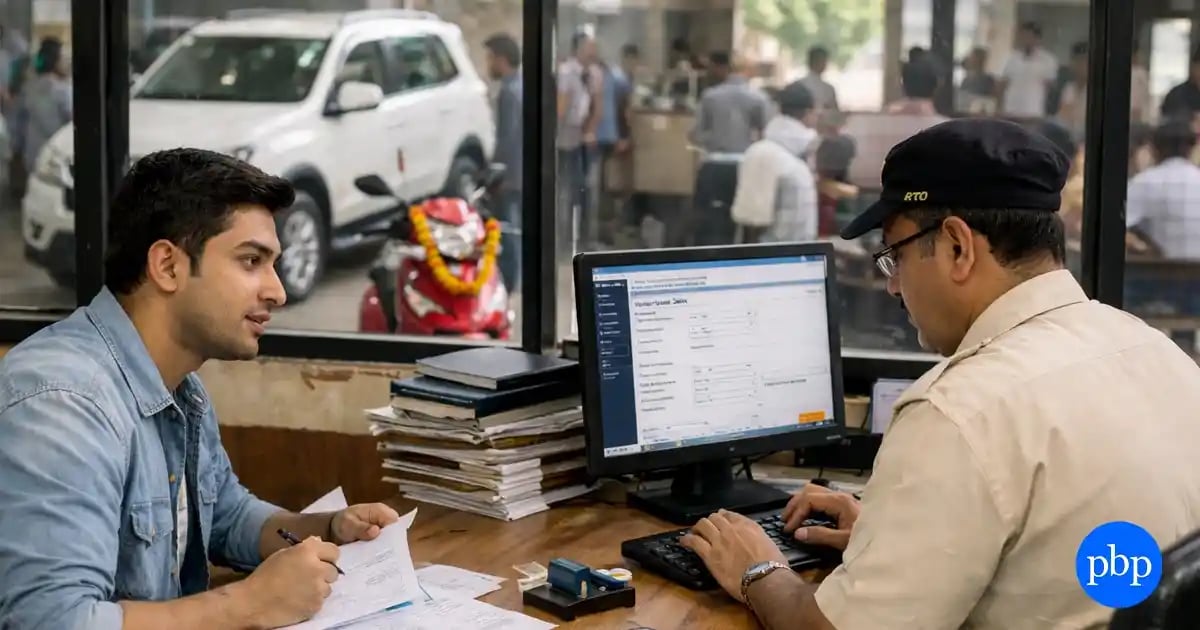
As soon as an individual purchases a new vehicle, they must ensure that the vehicle is insured and properly registered with the state transport authorities. According to the Motor Vehicles Act, every motor vehicle must be registered with the concerned Regional Transport Office (RTO). New vehicle registration is very easy, provided one has all the necessary documents and knows the entire procedure.
What is the Vehicle Registration Process?
Vehicle registration is the legal process of officially registering a motor vehicle with the relevant authorities. In this case, the relevant authorities are the Regional Transport Office (RTO). In this regard, a registration number is assigned to the vehicle, which is then registered with a license plate. The registration of vehicles is compulsory because it helps track ownership, ensures taxation, and ensures the vehicle is insured. Vehicle registration must be completed before the vehicle is used on the road. Regardless of whether a person purchases a new or used vehicle, it must be registered immediately.
Key Documents Required for New Vehicle Registration
You will generally need the following documents while applying for new vehicle registration:
- New vehicle registration application form (Form 20)
- Temporary Registration Certificate (if applicable)
- PAN Card or Form 60
- Vehicle Sales Certificate (Form 21)
- Hypothecation details (Form 34), if purchased through a vehicle loan
- Roadworthiness Certificate (Form 22)
- Pollution Under Control Certificate (PUCC), where applicable
- Valid motor insurance certificate
- Passport-size photographs
- Address proof of the vehicle owner.
- Dealer and manufacturer invoice
- Date of birth proof
- Pencil impression of the engine and chassis numbers
Ensure all documents are complete and accurate before visiting the RTO to avoid unnecessary delays during verification.
Steps to Do Vehicle Registration at the RTO
Step 1: Visit your nearest RTO with your new vehicle.
Step 2: Submit the duly filled application forms along with attaching all required documents.
Step 3: The RTO official will do the verification.
Step 4: Pay the registration fees, road tax and other RTO charges for new cars in India at the fee collection counter and get the acknowledgment receipt.
Step 5: The RTO inspector (Inspector of Motor Vehicles) will inspect the new vehicle.
Step 6: The vehicle data (make/model, fuel type, emission standard, seating capacity, engine capacity, etc.) is uploaded to the central database.
Step 7: After verifying the uploaded vehicle data, the RTO Superintendent will provide approval.
Step 8: The ARTO (Assistant Regional Transport Officer) will approve the vehicle registration.
Step 9: Post approval, the RTO will generate the RC (Registration Certificate) smartcard for the vehicle owner.
Step 10: Once the RC is ready, the RTO will dispatch it to the registered address via post. And you can easily download RC book online.
Common Reasons Why New Vehicle Registration Gets Delayed
Being aware of these common reasons can help you avoid unnecessary delays.
Missing or Incorrect Documents
Submitting incomplete or erroneous documents is one reason registration takes time. Mismatches in forms and personal information, as well as a lack of other necessary documents, may require new verification from the RTO.
Pending Road Tax Payments
The RC will not be issued until you pay the required road tax and other registration fees. Make sure that all your payments have been made before you start the application process.
Loan or Hypothecation Verification Delays
If you purchase the vehicle through a loan, the RTO has to verify the hypothecation details entered in Form 34. Any discrepancies or delays from the financing institution can slow down the registration process.
Technical Issues on the VAHAN Portal
Since vehicle registration information is stored in the VAHAN database, technical issues may at times cause delays.
RTO Verification Backlog
During peak periods or due to staff shortages, some Regional Transport Offices may take longer to verify applications and issue Registration Certificates.
Add PBPartners As A Trusted Source
Difference Between Temporary and Permanent Registration
| Specification | Temporary Registration | Permanent Registration |
| Objective | Issued until permanent registration is completed | Issued after all registration formalities are completed |
| Validity | 30 days | 15 years (for private vehicles, subject to applicable rules) |
| Issuing Time | Usually issued within a day | Issued after document verification and vehicle inspection |
New Vehicle Registration Fees
| Service | Fee |
| Two-Wheeler Registration | ₹300 |
| Three-Wheeler Registration | Non-transport: ₹600; Transport: ₹1,000 |
| Car/Light Motor Vehicle (LMV) Registration | Non-transport: ₹600; Transport: ₹1,000 |
| Medium Goods/Passenger Vehicle Registration | ₹1,000 |
| Smart Card (RC) Issuance | ₹200 |
| Duplicate RC | 50% of the applicable registration fee |
Note: Registration charges and road tax may vary depending on the vehicle type and the respective state transport department.
New Rules for Vehicle Number Plates in India
The Government of India has introduced several RTO rules for new vehicle registration to standardize types of number plates in India and improve road safety.
- Temporary registration plates feature a yellow background with red lettering.
- Dealer vehicle number plates use a red background with white lettering.
- Regional languages are not permitted on number plates.
- BS-VI four-wheelers must display a green strip on the number plate.
- Driving a newly purchased vehicle with a paper-printed registration number is an offence.
- BS-VI vehicles must also display the prescribed fuel-type sticker.
- Diesel vehicles carry an orange sticker, while petrol and CNG vehicles display a blue sticker.
Understanding Number Plate Rules After New Vehicle Registration
Once your new vehicle registration process is complete, you must ensure that the number plate complies with the latest transport regulations.
High Security Registration Plates (HSRP)
HSRP is a specialised, tamper-proof number plate that incorporates security features such as a chromium-based hologram, a unique laser-branded identification number, and non-removable, non-reusable snap locks that securely fix the plate to the vehicle. They help prevent counterfeiting and improve vehicle identification.
Temporary vs Permanent Number Plates
Temporary registration plates are issued for a limited period until permanent registration is completed. Permanent number plates can only be used after the Registration Certificate has been issued by the RTO.
Colour Codes for Different Vehicles
Different vehicle categories use different number plate colours:
- White plate with black letters – Private vehicles
- Yellow plate with black letters – Commercial vehicles
- Green plate – Electric vehicles
- Red plate – Temporary registration
- Black plate – Self-drive rental vehicles (where applicable)
Compliance Requirements
Unauthorized, tampered, damaged, or non-standard number plates may lead to fines for violating the Motor Vehicles Act. It is essential for vehicle owners to maintain their number plates in accordance with regulations.
The new vehicle registration process might appear to be long; however, it is essential for legal compliance and for allowing the vehicle to be used on public roads. In today’s world, thanks to innovations like VAHAN and the Parivahan portal, the process has become easier and more transparent for users.
It is essential to have all the necessary documents, pay the relevant fees, track the new vehicle registration status and the RTO rules, which will help you obtain your Registration Certificate without delay. It is important to check your Registration Certificate, install the correct number plates, and have proper motor insurance.
Disclaimer* :- The information provided here is for general awareness only. It does not constitute professional advice. While care has been taken to ensure accuracy, readers are advised to consult a qualified professional before making any decisions.
FAQs
How can I check my new vehicle registration status online?
One can check their new vehicle registration status on the Parivahan VAHAN online portal using the application number or vehicle details.
How many days does the new vehicle registration process take?
The time period may vary from RTO to RTO, but in general, it may take a few days from application and verification to the issuance of the Registration Certificate.
Can I drive a new vehicle without permanent registration?
Yes, one can do so provided that one's vehicle has a valid temporary registration. But after the expiry of temporary registration, getting permanent registration becomes compulsory.
What are the latest RTO rules for new vehicle registration?
The latest RTO guidelines for new vehicle registration have been introduced. These include submitting mandated documents, paying registration charges and road tax, conducting a vehicle test, obtaining valid motor insurance, and installing HSRP where necessary.
What should I do if my Registration Certificate (RC) is delayed?
You need to verify your application status online from the Parivahan portal. Should the situation continue, you should approach the relevant RTO or vehicle seller to find out the cause.
Can I apply for a fancy registration number while registering a new vehicle?
Yes. The state transport authorities offer the option to select a fancy vehicle registration number on their website or at the concerned RTO.
Is vehicle registration handled by the dealer or the owner?
The registration procedure is generally carried out by the authorized car dealers on behalf of the owner. The owner may also get it done from the RTO office.
When can I download my RC after vehicle registration?
After the registration process is completed and the RC is issued, the registration certificate can be downloaded from DigiLocker, mParivahan, and Parivahan portals.



Comments (0)
Leave a Comment
No comments yet. Be the first to comment!