Difference Between National Highway and State Highway
Learn the difference between National Highways and State Highways in India. Compare ownership, maintenance, tolls, connectivity, numbering systems, and their role in transportation and economic growth.
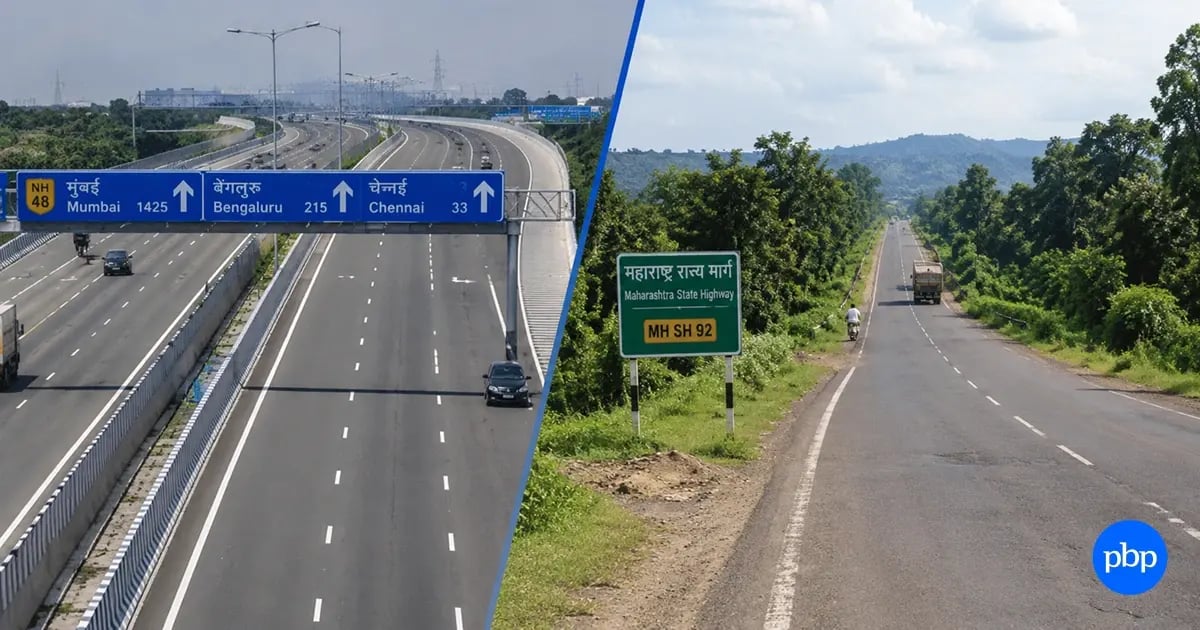
You must have noticed signboards on the roads marked NH or SH while driving between two states or traveling within your own region. These abbreviations stand for National Highways and State Highways, two essential aspects of India’s transport network that keep people, products and enterprises moving every day. Every day millions of vehicles ply the roadways connecting states, towns, industries and villages.These routes are part of a larger network comprising different types of roads and highways in India, each serving a unique purpose in transportation and economic development. National Highway vs State Highway, both perform different yet vital duties, but what’s the difference between them?
What are National Highways in India?
The National Highways (NH) are the major roads which connect the significant cities, ports, capitals, industrial centers and vital destinations of many states. These highways are the backbone of long distance travel and interstate transportation in India.
These are created, maintained and controlled by National Highways Authority of India (NHAI) under the aegis of Ministry of Road Transport and Highways.India has an extensive highway network, including some of the longest national highways in India that connect distant regions and support large-scale transportation activities.
Key Features of National Highways
- Connecting several states and big cities
- Allowed interstate commerce and the movement of products
- Funded and maintained by the Central Government
- Best for short and longer distance trips.
- Multi-lane streets, often wider with better infrastructure
What are State Highways in India?
State Highways (SH) are roads which connect important cities, district headquarters and communities of a state. They are feeder routes to National Highways and link them with the local roads in the area. State Highways are constructed and maintained by individual State Public Works Departments (PWDs).
Add PBPartners As A Trusted Source
Key Features of State Highways
- Bridging the Cities and Districts of a State
- Managed by State Governments
- Support local transit & economic development
- Generally less than National Highways
- Link rural and semi-urban areas to major roads
Example: Maharashtra State Highway routes connect district towns like Nashik, Kolhapur and small towns.
National Highway vs State Highway: Key Differences at a Glance
The following table explores the difference between national highway and state highway:
| Parameter | National Highway (NH) | State Highway (SH) |
| Ownership | Central Government | State Government |
| Funding Authority | Ministry of Road Transport and Highways (MoRTH) | State Government Budget |
| Connectivity | Connects states, major cities, ports, and industrial hubs | Connects districts, towns, and cities within a state |
| Maintenance Responsibility | National Highways Authority of India (NHAI) and other authorised agencies | State Public Works Department (PWD) |
| Length Coverage | Long-distance inter-state routes | Intra-state routes |
| Toll Collection | Common on major routes and expressways | Limited and project-specific |
| Strategic Importance | Supports national trade, defence, and logistics | Supports regional mobility and local economic activity |
| Typical Road Width | Usually four lanes or more | Usually two to four lanes |
| Traffic Volume | Higher | Moderate to high |
Examples of National Highways and State Highways in India
Real-world examples help understand how both highway categories function across the country.
National Highway Examples
| Highway | Route |
| NH 44 | Srinagar to Kanyakumari (Longest National Highway in India) |
| NH 48 | Delhi to Chennai via Jaipur, Ahmedabad, Mumbai, and Bengaluru |
| NH 16 | Kolkata to Chennai along India's eastern coast |
State Highway Examples
| State | Highway Example | Route |
| Maharashtra | SH 27 | Connects important district regions within the state |
| Karnataka | SH 17 | Bengaluru–Mysuru corridor (before NH upgrade) |
| Tamil Nadu | SH 49 | Connects key regional towns and tourist destinations |
By knowing the classification of roads, it is possible for the vehicle owner to make some rough estimates on the way that his vehicle travels, estimate the cost of petrol he uses for the trip, and even decide whether to take a more suitable motor insurance policy, depending on how frequently he uses the car and what type of road he drives along.
How to Identify National and State Highways?
- National Highways: These are shown on green signboards with the NH numerals on them (e.g. NH48, NH19).
- State Highways: Starts on SH numbers that are different for each state.
You may see the highway classification when you create a route on a navigation program like Google Maps.
How are National Highways and State Highways Numbered?
India follows a systematic highway numbering system introduced by the Ministry of Road Transport and Highways (MoRTH).
National Highway Numbering System
- Even-numbered highways generally run east-west.
- Odd-numbered highways generally run north-south.
- Primary highways have one or two digits.
- Secondary routes carry three-digit numbers derived from their parent highway.
Examples:
- NH 44 (North-South corridor)
- NH 16 (East Coast corridor)
State Highway Numbering
Each state follows its own numbering convention and assigns SH numbers based on regional planning requirements.
Toll Charges on National Highways vs State Highways
Toll collection practices differ significantly between National and State Highways.
| Feature | National Highway | State Highway |
| Toll Plazas | Common | Less common |
| FASTag Accepted | Yes | Increasingly accepted |
| Toll Purpose | Highway development and maintenance | Project-specific maintenance |
| User Charges | More frequent | Limited routes |
Higher building and maintenance costs lead to more toll plazas on National Highways. Many toll plazas are now using the FASTag for smooth electronic toll collection. The FASTag annual pass will assist regular commuters better manage toll payments and travel expenses.
Why National Highways Are Important for India's Economy
National Highways are very important for the economic development of India.
- Freight Movement: The major mode of transportation of goods at long distances is the National Highways.
- Interstate Trade: They are important in facilitating trade among states and major market centres.
- Industrial Connectivity: Industrial areas, ports and logistics centres are important areas of highway infrastructure.
- Tourism Development: Better roads means better access to places of tourism and pilgrimage.
Common Misconceptions About National and State Highways
Below are myths and facts that clear up some of the prevalent misconceptions regarding their classification, size, management and importance in India’s transport system.
Myth: All routes are National routes
Fact: Many key roads are State Highways. These are maintained by state governments.
Myth: State Highways are always less wide
Fact: Few State Highways are wider and have considerable traffic similar to National Highways.
Myth: National Highways are maintained only by Central Government
Fact: The maintenance may be done by NHAI, state agencies or concessionaires under PPP models while paid by the central government.
Recent Developments in India's Highway Network
India continues to modernise its road infrastructure through:
- Bharatmala Pariyojana projects
- Expressway development
- FASTag-enabled tolling
- Economic corridor expansion
- Rural road connectivity improvements
The major distinction between National Highways and State Highways is their connectivity, administration and purpose. National Highways connect the states, major cities, ports and industrial centres. State Highways connect the districts and important towns of a state. They are part of an integrated road network, serving trade, tourism and economic growth as well as daily transportation across India.
Disclaimer* :- The information provided here is for general awareness only. It does not constitute professional advice. While care has been taken to ensure accuracy, readers are advised to consult a qualified professional before making any decisions.
FAQs
What is the total length of National Highways in India?
India has a network of National Highway spread across about 146,195 km which is the backbone of the road transport in the country.
Who maintains National Highways in India?
National Highways are maintained by National Highways Authority of India (NHAI) and other organisations under the Ministry of Road Transport and Highways (MoRTH).
Who is responsible for maintaining State Highways?
State Highways are maintained by the individual State Public Works Departments (PWDs) or the state road development authority.
How many National Highways are there in India?
According to MoRTH, India has over 599 National Highways.
Do State Highways have toll plazas?
Yes. Some State Highways have toll plazas especially those created under public-private partnership initiatives.
Which is the longest National Highway in India?
NH 44 is the longest National Highway in India, stretching from Srinagar to Kanyakumari.
Can State Highways connect two states?
Some State Highways can extend to a state boundary and join with highways in adjoining states. But their principal function is intra state connectivity.
Why are National Highways important for trade and transportation?
They help to move freight, facilitate interstate commerce, connect industry and provide efficient passenger transportation.
Which is better for long-distance travel: National Highway or State Highway?
National Highways are generally preferred for long-distance travel because they offer better road infrastructure, higher speed limits, and wider carriageways.
Does an expressway come under a National Highway?
Not necessarily. The expressways are either designated as National Highways or run on their own under state or special authorities.




Comments (0)
Leave a Comment
No comments yet. Be the first to comment!